In the sun-drenched expanse of the Coachella Valley, where light has long captivated artists, a different kind of artistry plays out within the desert’s most lauded dining rooms, where psychological games of color, secrets, shadow, and storytelling take place.
While the region’s architects often focus on bringing the outdoors in, award-winning restaurant designers turn inward, delving into the subconsciousness of the dining experience. For these creatives, constructing a successful restaurant is less about arranging banquettes and more about directing a play where the diners are the stars.
“A restaurant has to be a fantasy,” says Martyn Lawrence Bullard, the designer behind The Pink Cabana at the Sands Hotel & Spa in Indian Wells, which opened in 2018. “Obviously, you go to a restaurant for great food and service and a fun experience, but you also go for the way it makes you feel and look.” If a home is a sanctuary of self, a reflection of who we are, then a restaurant is a theater of possibility, a vision of who we want to be for the evening. Bullard notes that thoughtful lighting, seating comfortability, and art on the walls are among the factors contributing to theatrical escapism.
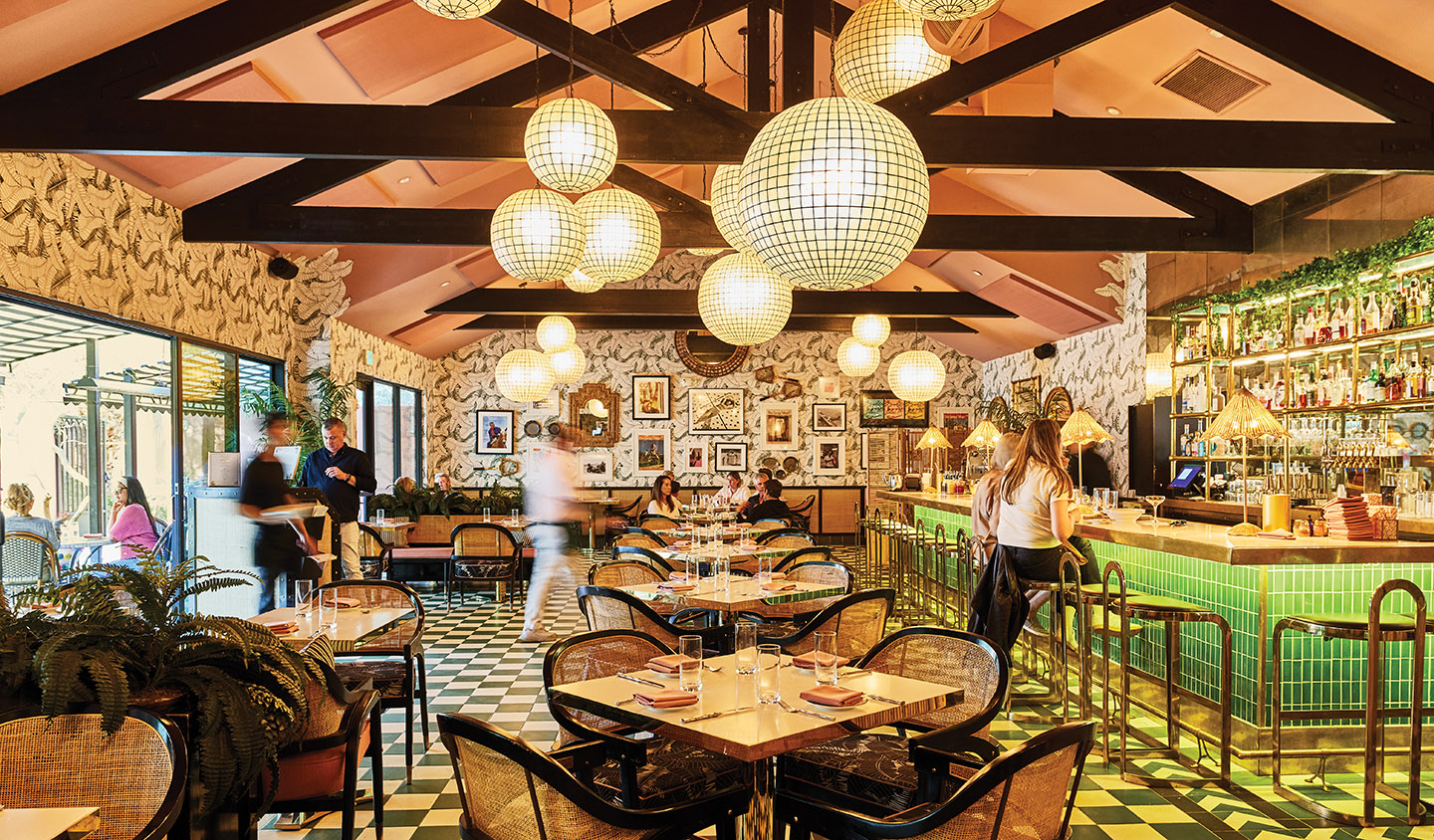
The Pink Cabana:
The Sands Hotel & Spa restaurant emulates the atmosphere of an old-school country club.
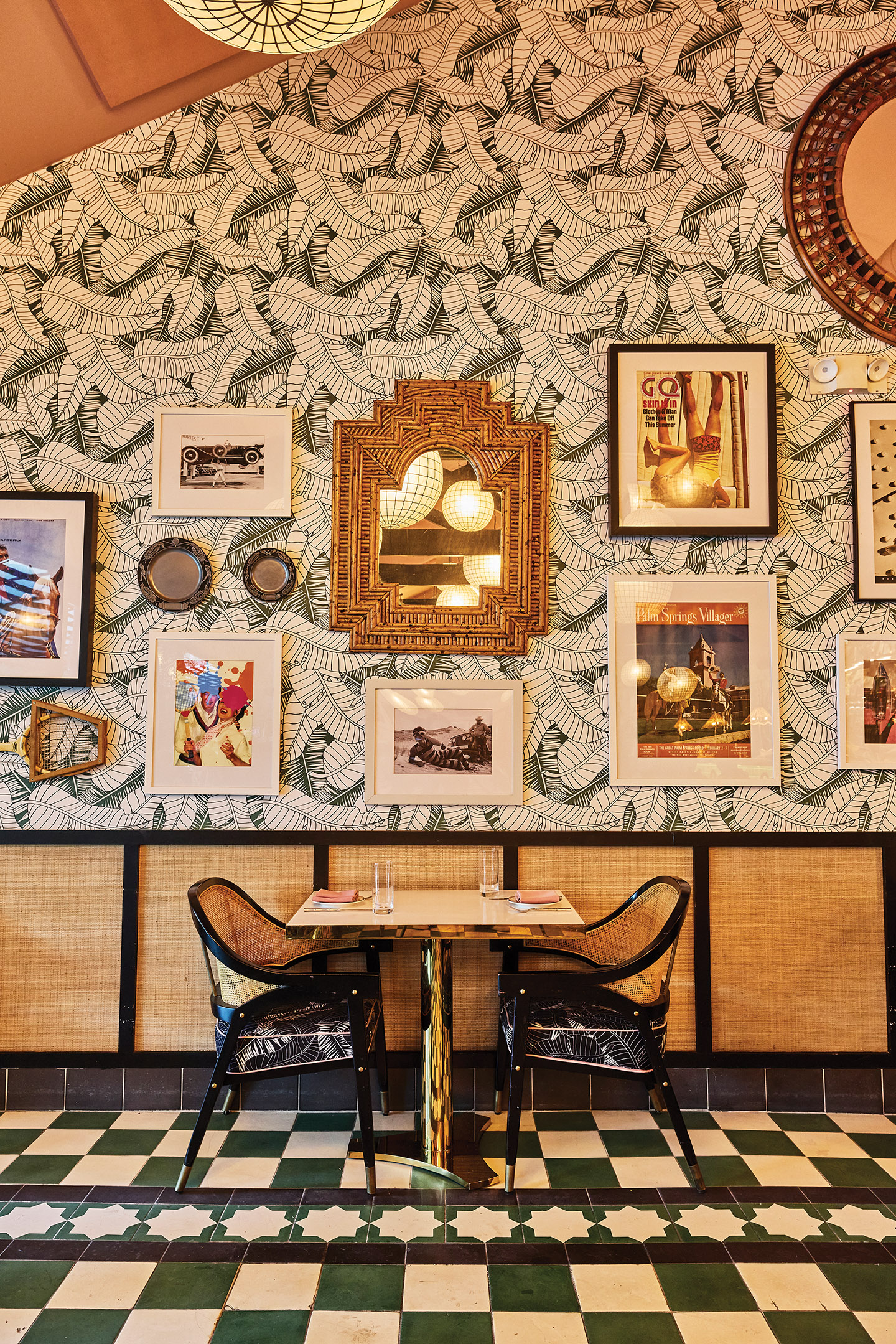
For The Pink Cabana, Bullard’s concept was effervescent and kinetic: an assemblage of flashy modernism, eclectic Moroccan touches, and vintage flair nodding to the area’s heritage, specifically its proximity to the iconic Indian Wells Tennis Garden. He sourced old trophies, celebrity photography, and other ephemera sprinkled throughout the space to create the panache of an old-school country club that never actually existed.
One of Bullard’s favorite personal touches is the real thing. Located on the wall near the kitchen and powder rooms, a black-and-white photograph showcases Frank Sinatra landing in his helicopter in Palm Springs, stepping out proudly with a glass of scotch already in hand. The image was captured by actor Yul Brynner, who was a passenger on the same helicopter and jumped out first to snap a pic of his friend’s arrival. The piece was donated by Bullard’s pal, Victoria Brynner, Yul’s daughter.
Bullard anchored The Pink Cabana with a custom wallpaper that he designed based on a scarf found in a local vintage store, a midcentury take on a palm leaf rendered in black and white. This monochrome backdrop allows the restaurant’s namesake color to sing. Bullard, who regularly appears on Architectural Digest’s AD100 and Elle Decor’s A-List, also employed lighting with dimmers — a constellation of giant capiz shell globes — to consistently ensure an ambiance where guests feel like their sexiest selves.
Across the realm of fine dining, such over-the-top design has evolved from a mere aesthetic choice into a critical cerebral and commercial engine, driven largely by the visual demands of social media. In an era where Instagrammability dictates dining and traveling choices, restaurants are no longer simply places to eat a juicy steak.
A hunger for more — more choices, more colors, more textures, more patterns, more deliciousness — aligns with the maximalist ethos of designers like Bullard, who notes that elements like The Pink Cabana’s flattering rosy hues and strategic lighting encourage guests to capture and share the moment. As Bullard puts it, “You’re going to want to flirt with everybody else around you. That’s a key part of design for a restaurant.”
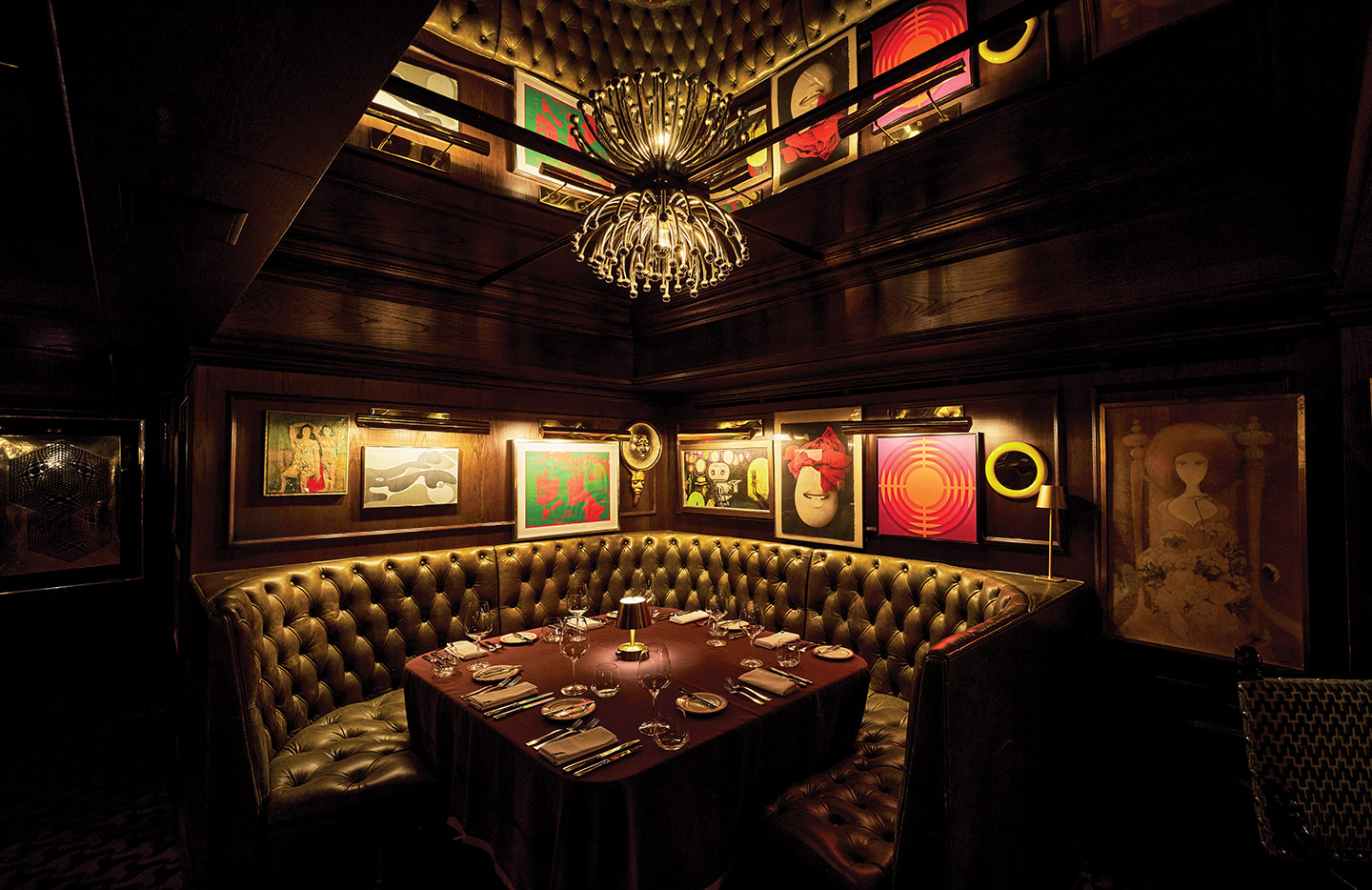
While Bullard focuses on building attraction, fellow celebrity designer Jonathan Adler prioritizes keeping secrets. In the labyrinthine grounds of the Parker Palm Springs, which he originally designed in 2004 and updated in 2017, Adler conjured a subversive portal to a bygone era. Mister Parker’s, the hotel’s flagship fine dining restaurant, is a masterclass in atmospheric storytelling. The room is intentionally dark, cloaked in deep, sultry colors, evoking the mood of a clandestine 1970s supper club or a sophisticated European den where indulgence is the main course.
For Adler, who has also been featured on the Architectural Digest AD100, the design process began not with swatches or floor plans but with a script. “My approach for the Parker was to create a backstory for the property,” Adler explains. He invented a fictional couple to guide his idiosyncratic aesthetic choices: Mr. and Mrs. Parker.
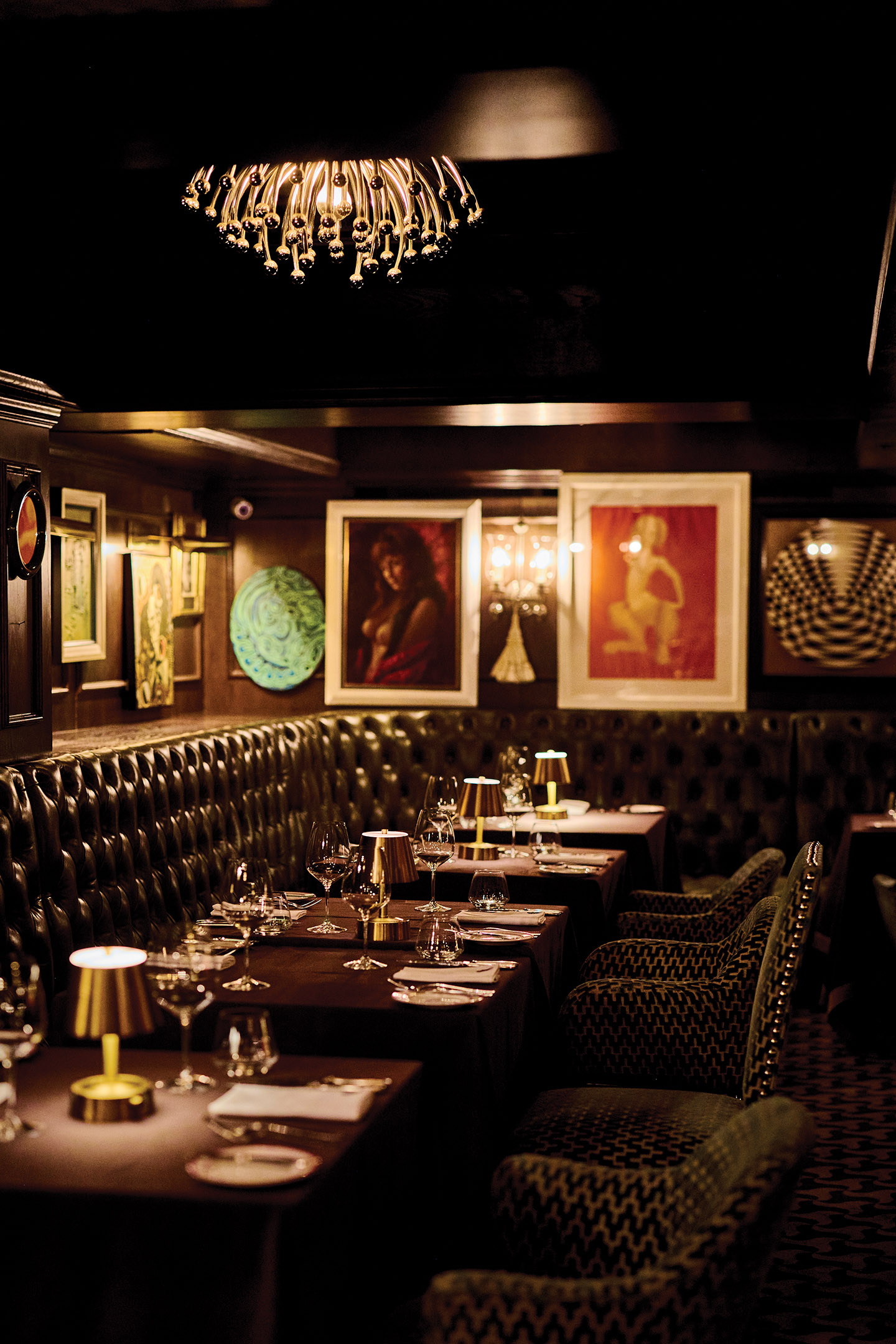
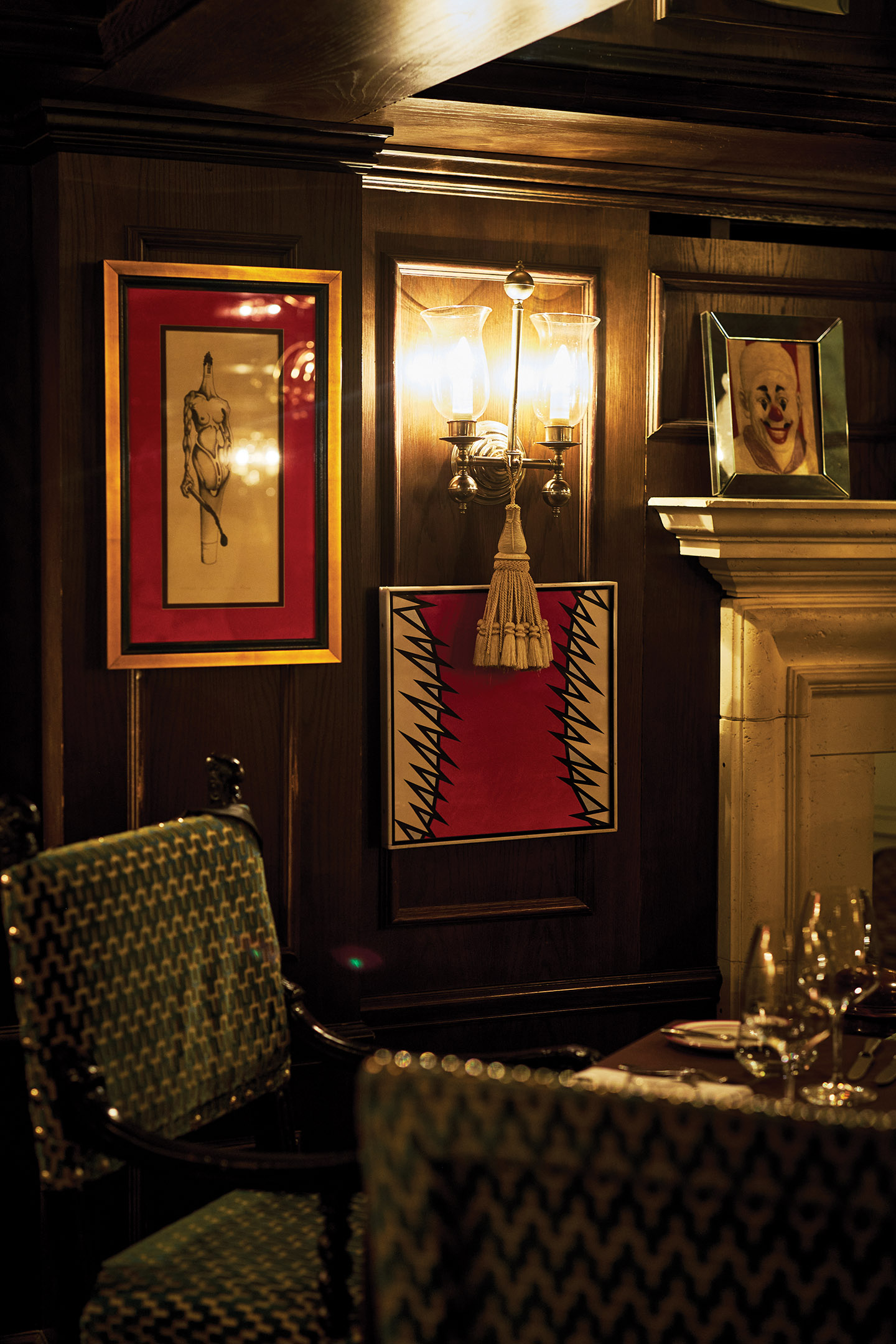
Mister Parker’s at Parker Palm Springs:
The room reflects Mister Parker’s invented persona, a well-traveled bon vivant with a taste for the decadent and slightly subversive.
“Mrs. Parker is the jet-setting aunt you wish you had but didn’t,” Adler says. “She travels the globe collecting objects for her fabulous estate.” Her husband, the titular Mr. Parker, is a charismatic lounge lizard with Old Hollywood, Rat Pack sensibilities. The duality plays out in the restaurant’s unapologetic tension between opulence and debauchery.
Adler’s biggest challenge with Mister Parker’s was structural. The restaurant has no access to natural light, a constraint that Adler embraced rather than fought. He leaned into the subterranean vibe to create a hideaway he calls “dark, sexy, mysterious, and intimate without feeling crowded or too serious.” A sensory overload of velvet upholstery, dark wood accents, and whimsical décor is carefully presented, not staged.
Such flourishes have deep roots in the valley. Wally’s Desert Turtle, which opened in Rancho Mirage in 1978, made a groundbreaking design statement that helped to redefine desert dining at the time. Commissioned by founder Wally Botello, whose granddaughter, Madalyn, runs the restaurant today, the project enlisted the talents of celebrated designer Steve Chase, who was then best known for his sumptuous residential work.
The collaboration was a significant departure from standard commercial design, bringing a level of residential luxury and sophistication to a public space that had rarely been seen in the Coachella Valley. Chase treated the 10,000-square-foot venue with the same meticulous detail he applied to the private estates of his A-list clients like Farrah Fawcett and Gene Hackman, effectively blurring the lines between a high-end home and a fine dining establishment.
“A restaurant is almost like a film set. You’re creating a platform for people to meet, talk, celebrate, flirt, observe.”
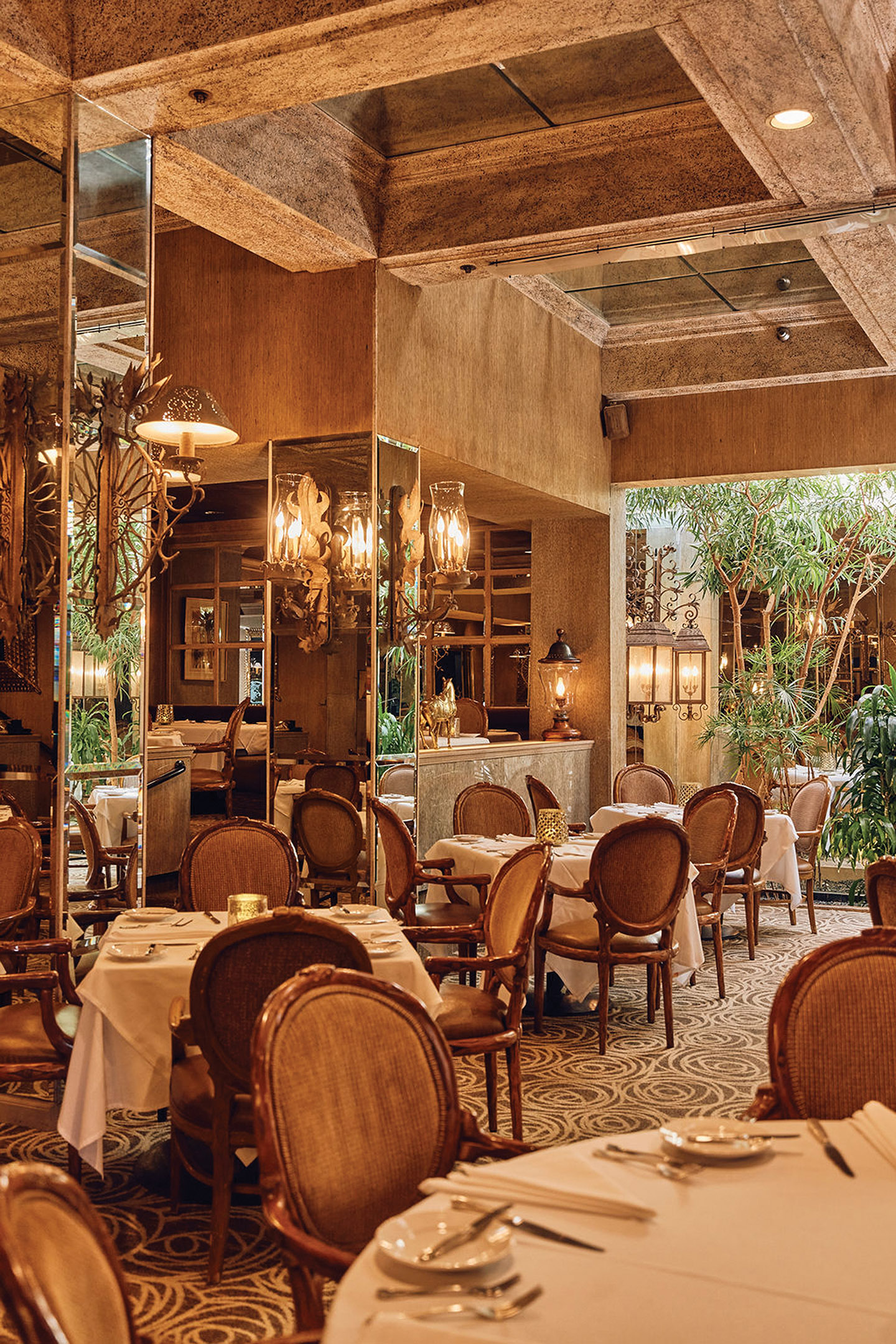
Wally’s Desert Turtle:
Steve Chase’s mirrored ceilings, warm glow, and touches of greenery give Wally’s Desert Turtle an enduring sense of desert glamour.
The atmosphere Chase created was one of Old World elegance seamlessly blended with a modern California sensibility. The design eschewed the starkness often associated with modernism in favor of a warm, enveloping richness. Guests are greeted by an ambiance that’s simultaneously grand and intimate, achieved through a masterful use of layers and lights. Chase’s ability to harmonize with materials — mixing plush upholstery with hard, reflective surfaces — gave the room a tactile quality that invited diners to linger.
Central to this unique atmosphere was the spatial layout, particularly the grand sunken dining room. This architectural decision allowed guests to see and be seen. Flanking the main area is an atrium topped with skylights, a design move that brings the desert sky inside while maintaining climate-controlled comfort. This integration of indoor-outdoor elements was a Chase hallmark. The execution at Wally’s, framed by etched glass dividers and indoor greenery, felt revolutionary for a restaurant, providing a sense of openness without sacrificing privacy.
The finishes were a testament to Chase’s fearless perspective. Interiors feature soaring ceilings covered in beveled mirrors, expanding the visual space and reflecting the warm, flattering light that Chase was famous for engineering. Today, Wally’s stands as a rare time capsule of the late designer’s work, preserved largely as it was when it opened. The design’s ability to attract dignitaries and celebrities, from Bob Hope to Gerald Ford, speaks to the unique atmosphere Chase cultivated.
In Palm Desert, Sophie Goineau’s verdant design for the Californian bistro Porta Via, which debuted in 2022, provides a different kind of theatricality — one influenced by the landscape and the optimism of the area. For Goineau, the project nods to the midcentury era, when “entertaining, landscape, and architecture were inseparable.” She views restaurant design as a form of choreography. “A restaurant is almost like a film set,” she says. “You’re creating a platform for people to meet, talk, celebrate, flirt, observe.”
During a drive into the valley, inspiration struck Goineau, who was honored by both the Kyoto Global Design Awards and LUX Red Awards in 2025 for a home she designed in Malibu with a wave-like ceiling detail. Descending from Idyllwild on Highway 74 into Palm Desert, she was struck by the transition from snow and pine trees to boulders and rocks, culminating in a sunny hug from El Paseo. The contrast informed her desire to create a space that evoked a shelter: “desert warm inside, white and bright outside.”
The physical space, however, offered a significant hurdle: a 25-foot entry atrium felt dauntingly out of scale for a dining room. Rather than lowering the ceiling, Goineau installed a floating, layered wooden structure that hovers within the space. Composed of geometric planes that overlap like the nested squares seen in 1960s architecture, the intervention sets the tone for the entire venue — and usually goes unnoticed.
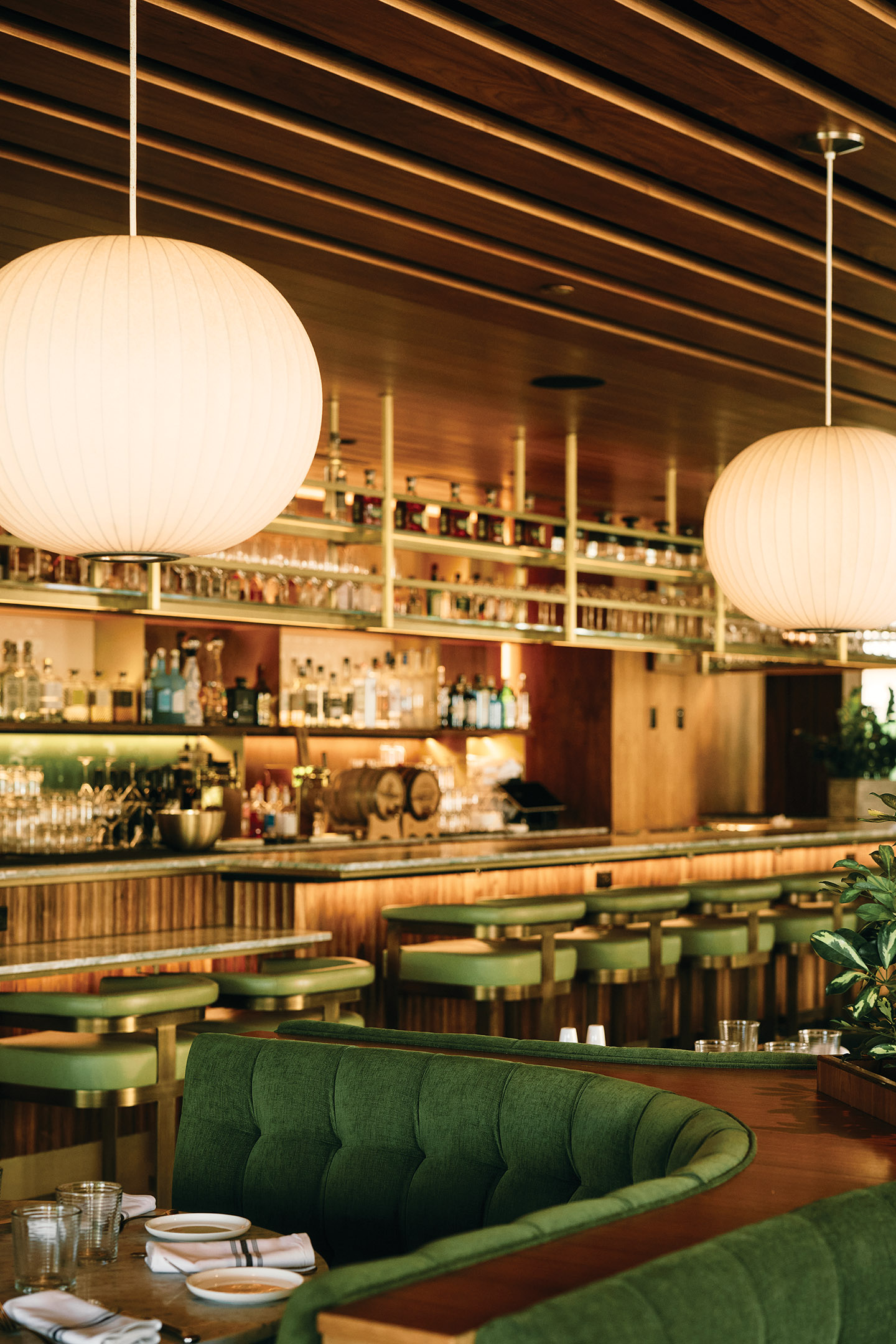
Porta Via:
At Porta Via in Palm Desert, designer Sophie Goineau set out to create a social, midcentury-inspired destination restaurant with a layout that keeps diners connected rather than isolated.
Goineau assumes most guests don’t realize how design shapes their psychological reaction, and that’s OK. “[It’s] designed so that wherever you sit, you feel connected — never isolated,” she says. The subtle manipulation is a savvy lesson in desert adaptation. “You don’t fight the sun,” Goineau adds. “You filter it.”
While Goineau, Adler, and Bullard leaned into the natural and social history of the Coachella Valley, Michel Abboud of SOMA Architects took a sharper, more brutalist turn with Workshop Kitchen + Bar, which opened in 2012 in Palm Springs’ Uptown Design District. Housed in a historic 1926 Spanish Colonial Revival structure on Palm Canyon Drive, the restaurant presents a striking dialogue between the past and the avant-garde.
Diners are confronted with a soaring 27-foot cathedral ceiling and a sense of ecclesiastical reverence. The centerpiece is a 35-foot-long poured concrete communal table that acts as the nave of executive chef Michael Beckman’s culinary church honoring farm-to-table cuisine. Flanking this central aisle are monolithic concrete booths that rise toward the ceiling like futuristic confessionals.
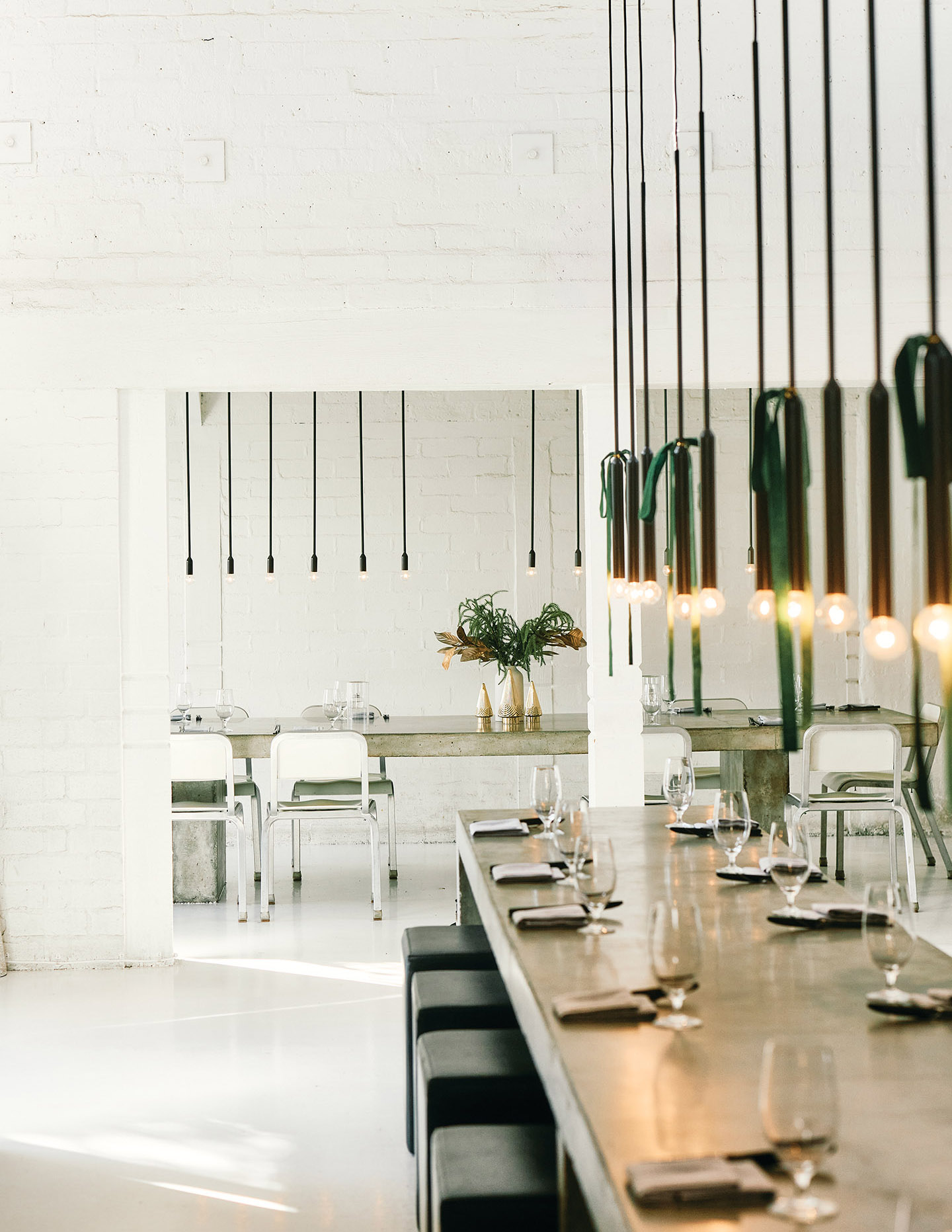
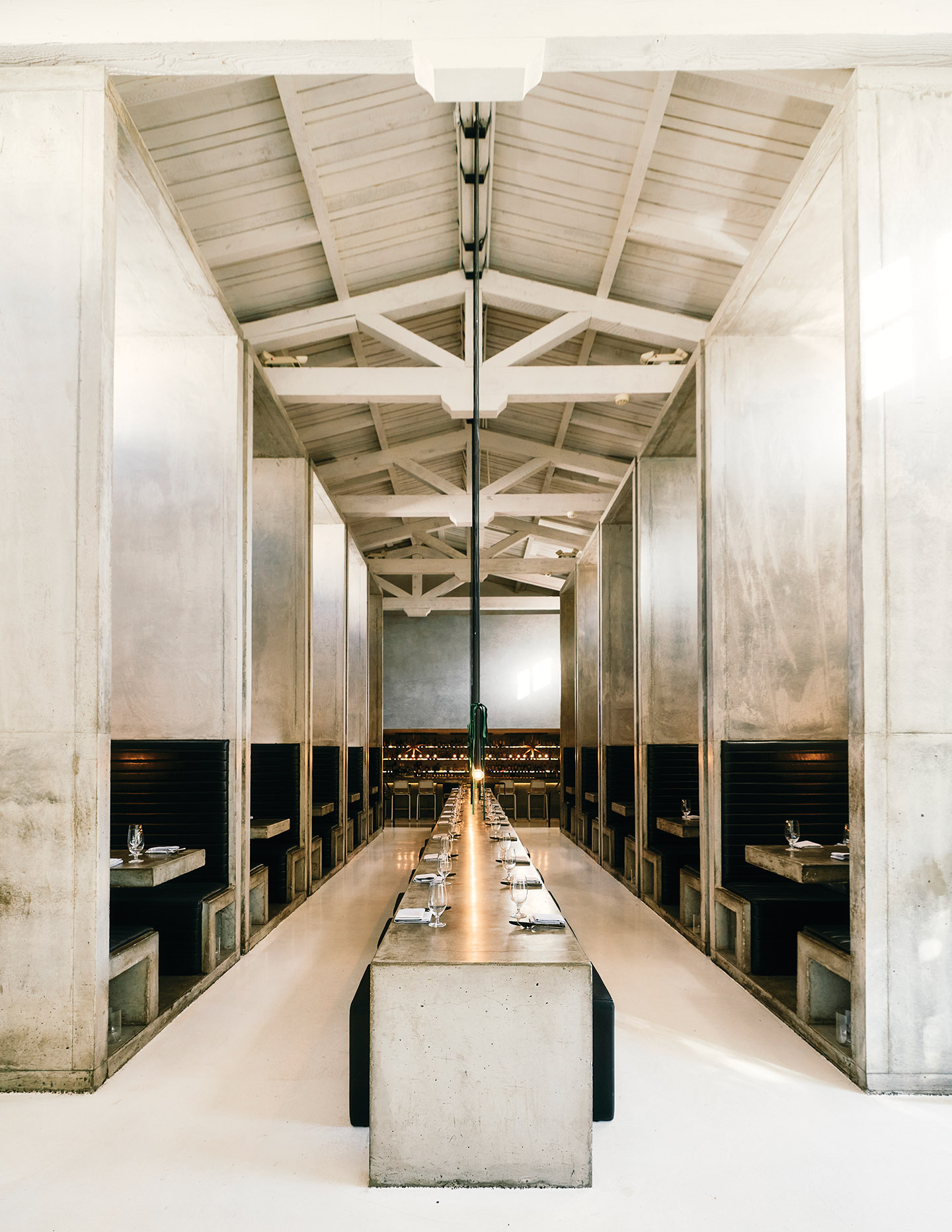
Workshop Kitchen + Bar:
The stark concrete concept by Michel Abboud of SOMA Architects earned a James Beard Award for Best Restaurant Design.
Workshop is an exercise in restraint and geometry, commanding attention through mass and void, proving that in a valley famous for lightness, there is profound beauty in weight.
The design, which won the James Beard Award for Best Restaurant Design (over 75 seats) in 2015, relies on the dramatic tension between the white stucco of the historic shell and the heavy, gray permanence of the concrete insertions. Workshop is an exercise in restraint and geometry, commanding attention through mass and void, proving that in a valley famous for lightness, there is profound beauty in weight. Lighting plays a crucial role, too. Designed by the Beirut-based firm PSLab, the fixtures mimic industrial trusses.
From the brutalist awe of Workshop to the flirtatious glow of Pink Cabana, drama is always on the menu in the desert, where designers serve as the ultimate hosts, ensuring the atmosphere lingers long after dessert. “If [guests] feel comfortable, without knowing why,” Goineau says, “the interior design is doing exactly what it should.”