Long before she stepped into a professional kitchen, Nyitre Rodgers already had a guiding culinary philosophy.
At dinner one night in Aruba with friends, she watched a companion push ingredients from her entrée to the side, as if removing the decoration. Rodgers, incredulous, leaned in: “Why are you not eating that? It’s on the plate for a reason.”
The moment revealed a conviction she hadn’t yet verbalized: Every element on a dish matters.
Years later, that early instinct shapes Rodgers’ work as chef de cuisine at The Edge Steakhouse at The Ritz-Carlton, Rancho Mirage.
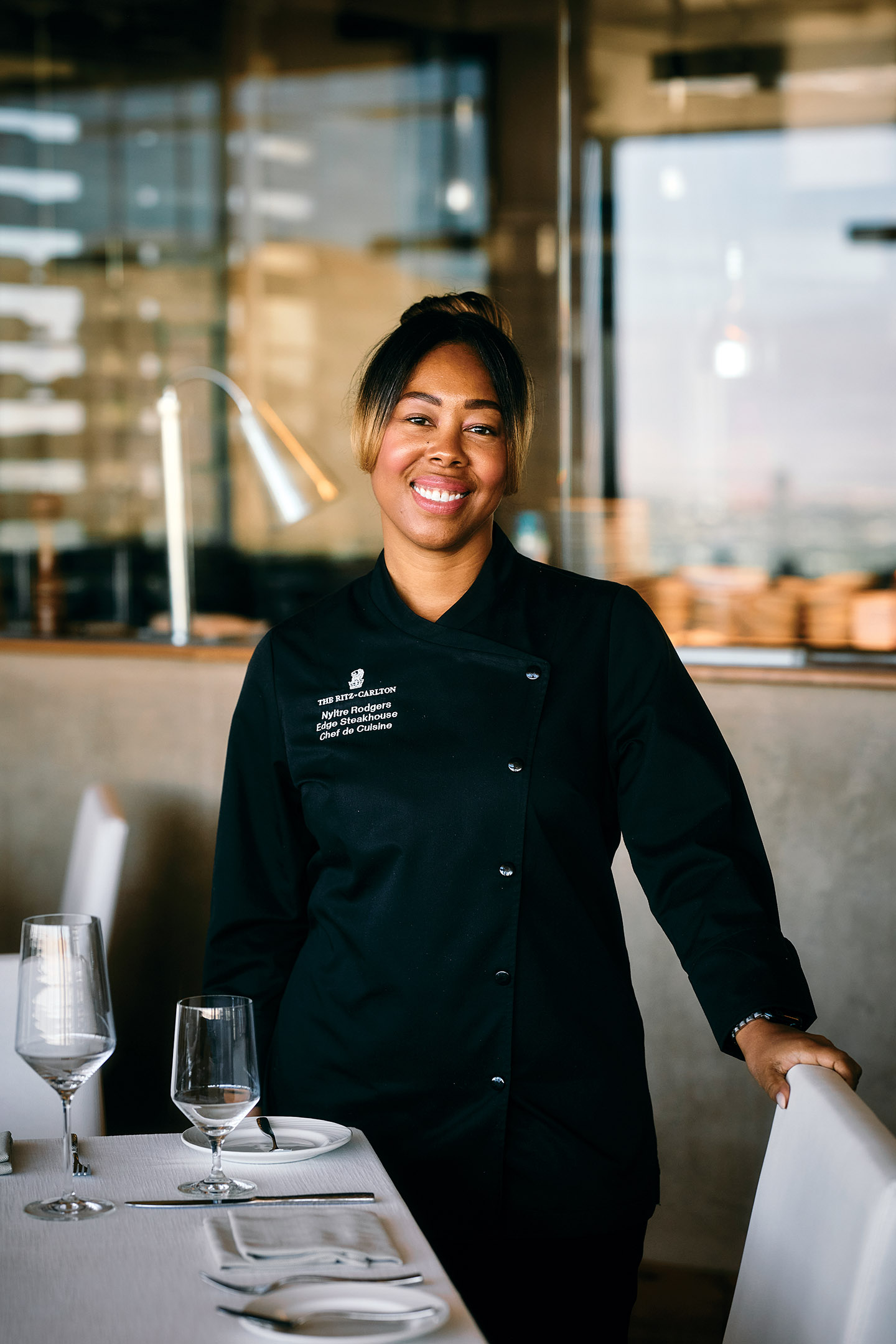
Chef de cuisine Nyitre Rodgers.
“Sometimes you get a dish with a branch or some random leaf on top, and you wonder, what’s the point of that?” she says, laughing. “Well, I don’t do that. If it’s on the plate, it has a purpose.”
Raised in Southern Maryland, the daughter of a high school principal and a fire captain, Rodgers started her career in a desk job at the Department of Commerce. After six years, the work felt stifling, so she channeled her love of cooking into a catering business on the side — first small gatherings, then weddings and conferences. By 2015, ready for formal training, she enrolled at Johnson & Wales University in Charlotte, North Carolina, known for its culinary arts program.
Telling loved ones about the career change wasn’t exactly a shock. “My friends said, ‘We knew you’d end up here,’ ” Rodgers says. “But everything happens in its own time.”
Her externship put her in the kitchens of the Carolina Panthers during their Super Bowl season, which led to a stint with the Baltimore Orioles. But stadium food wasn’t where her passions lay. Instead, she joined the opening team at MGM National Harbor in Maryland, working behind the line in restaurants run by José Andrés and Marcus Samuelsson.
Those experiences opened the door to the hotel world, where Rodgers has built her career ever since. At Gaylord Hotels in National Harbor, she moved from casual dining into banquets, honing her skills with large-scale events. When the pandemic hit, and Florida reopened before many other states, she fielded calls from restaurants there and spent a stretch cooking in the Sunshine State. Eventually, she landed at the Edition in Miami, home to a partnership with Michelin-starred chef Jean-Georges Vongerichten.
A colleague tipped her off that The Edge in Rancho Mirage was seeking a chef de cuisine. Rodgers took on the role in May, and she’s already buzzing with ideas. By noon on the day we met, two of the activity rings on her Apple Watch were already closed, a small but telling measure of her energy.
Her inspiration often circles back to her family table. Rodgers’ father, of Samoan heritage, cooked with a Pacific Islander sensibility; her mother favored Southern-style flavors. Add to that her time studying abroad and traveling in Spain, and Rodgers’ cooking has become a layered reflection of her life.
A recent tasting at The Edge featured a silky lobster and butternut squash bisque; Kurobuta pork chops paired with honeynut squash, tamarind purée, and a hint of heat from chile butter. A bold cabernet-poached pear and endive salad, as well as glazed prawns brightened with pear relish, chive blooms, and bacon jam — each bite layered harmoniously with a playful sense of surprise.
“All these different experiences I’ve had,” Rodgers says, “they’ve shaped what’s on the menu today.”
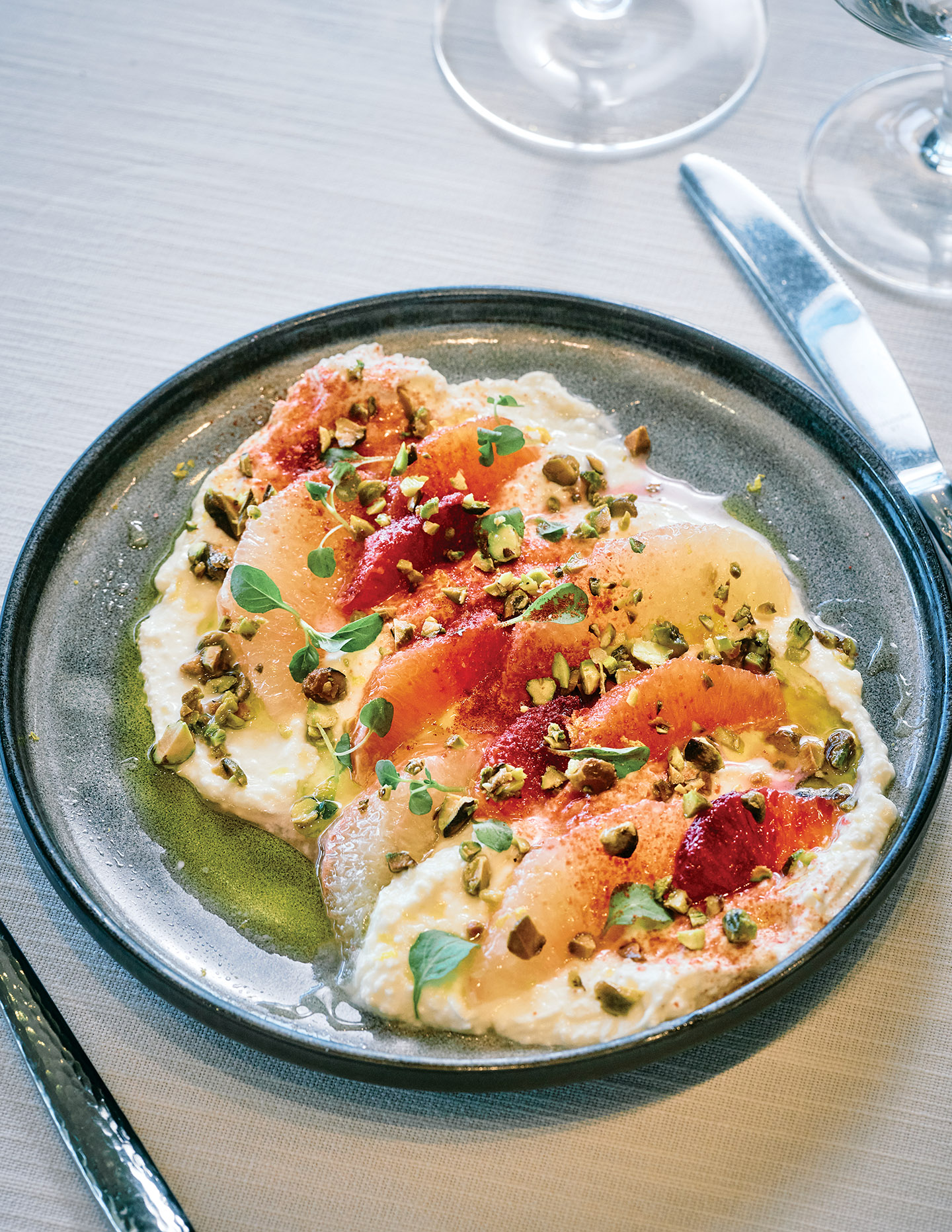
Whipped feta with citrus, pistachios, and micro basil and mint.
a cut above
The Art of Dry-Aging Beef
Select cuts at The Edge are dry-aged in-house to unlock complex flavors.
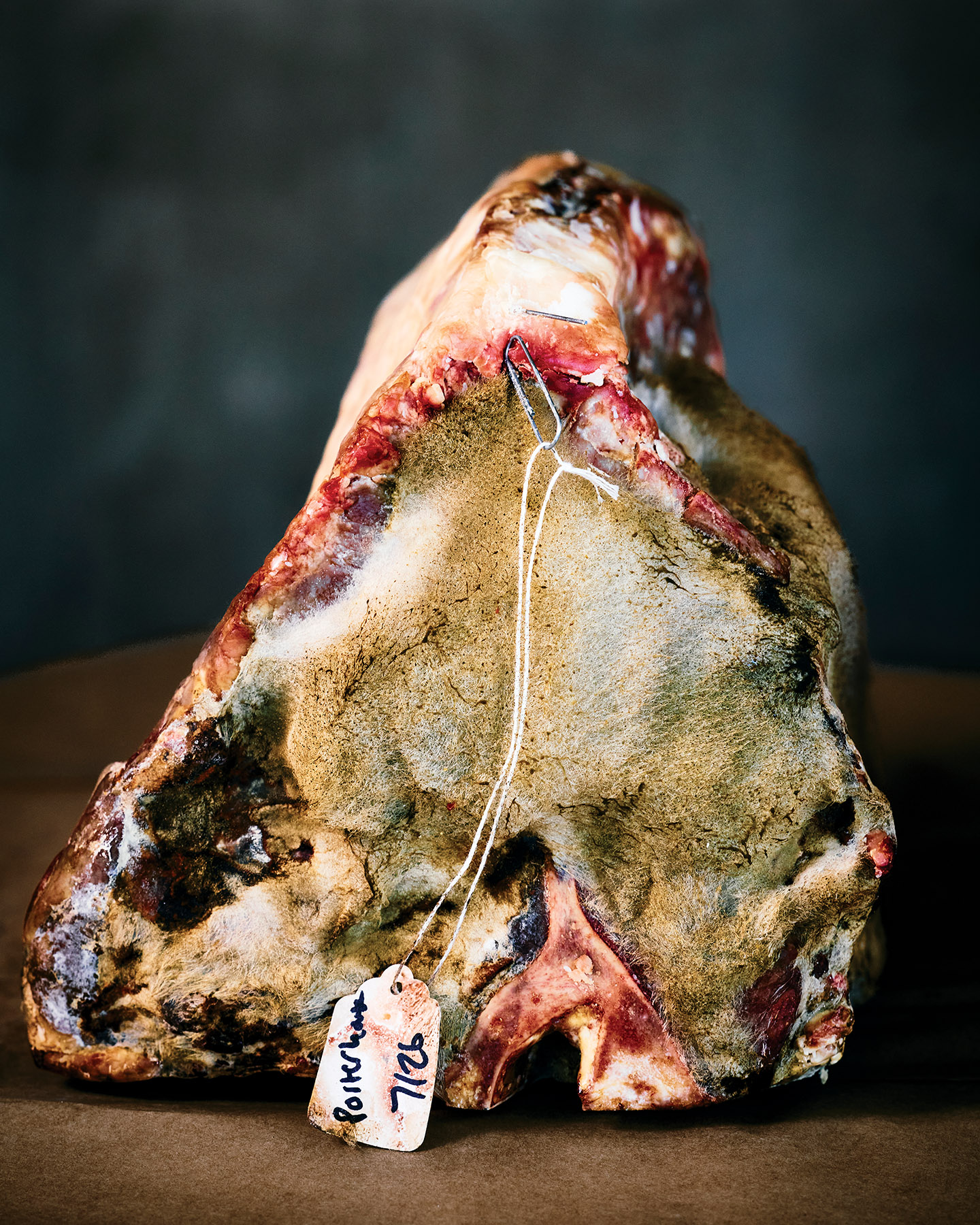
Like cheese, dry-aged steak develops a subtle, savory funk that intensifies over time. This month, The Edge debuts cuts aged 120 days.
At The Edge Steakhouse, prime cuts of meat rest in a specialized cooler kept at 34 to 38 degrees Fahrenheit with 75 to 85 percent humidity. Fans circulate air constantly, preventing harmful bacteria while allowing a hardened “bark” to form on the surface.
Inside, two key transformations unfold. First, the moisture is removed from the meat, which “concentrates the flavor to give it more of an unctuous, meaty, richer taste,” chef de cuisine Nyitre Rodgers says. The longer the aging — 45, 60, even 90 days — the more intense the nutty, umami-rich flavor.
Second, enzymes break down, which tenderizes collagen and proteins into a softer, more buttery texture. “We’ve refined our techniques to take the dry-aging program to new heights,” says manager Daniel Rodriguez. “As a result, we have 120-day aged selections debuting Nov. 1.”
Before cooking, the darkened crust is trimmed away, revealing richly marbled beef. “We’re taking the very best cuts and drawing out every flavor,” Rodgers says.